 Rod Howard
Home Assistant · Interaction & System Design
Cutting smart home alerts by 80% without missing a critical event.
After: 80% fewer notifications, with what needs someone first on top.
Illustration. The alert text is real; the size of the pile is not a count.
When every sensor triggers an alert, important events get ignored. I redesigned notifications around urgency, context, and actionability, so critical events demand attention while routine updates wait.
- Role
- Interaction Design, System Design
- Platform
- Home Assistant
- Year
- 2024
- Scope
- 87 devices · 557 sensors · 140 automations
- Primary users
- My family
Overview
The home runs on Home Assistant with 87 devices, 557 trackable sensors, and 140 automations. By mid-2024, the household was logging roughly 10,000 state changes a day. The alerts coming out of it were easy to ignore, so we started ignoring the ones that mattered.
I designed the framework end to end. I audited every signal, rewrote delivery around urgency, context, and actionability, then tuned it against daily feedback from the two primary users: my wife and me.
The challenge
When every alert becomes white noise
Every open door, temperature blip, and motion trigger fired a notification. Within a week, everyone in the house started swiping them away without reading. The garage stayed open overnight. Freezer alarms ran through dinner. Windows reported themselves every time the breeze moved them.
My challenge: cut the noise without hiding anything critical.
Fig. 01What reaches a phone
Logged
10k
state changes a day, from 557 sensors on 87 devices
Scored once per event
- Criticality
- Urgency
- Contextual relevance
- Interruption level
- Delivery persistence
Notifications a day
Design principles
Four rules for a trustworthy feed
Before rebuilding anything, I set four rules. Each one targeted a specific failure in the old setup.
Signal over noise
If an alert does not need a response, it does not need to fire.
Context and relevance
Timing, location, and who is home decide whether an alert fires at all.
Critical must be unmissable
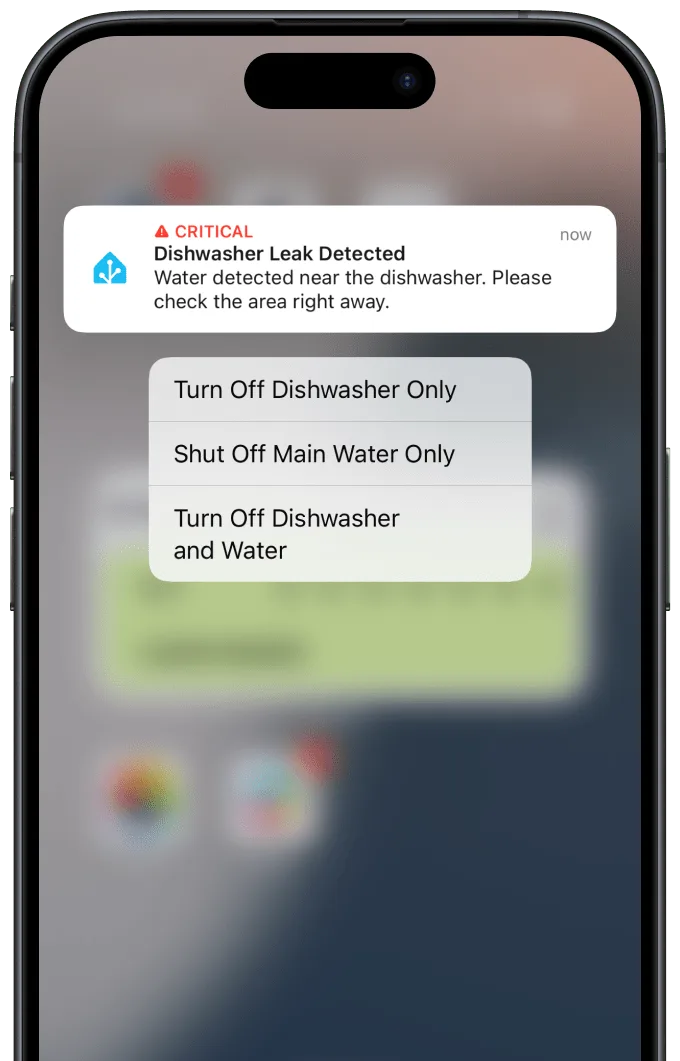
A water leak escalates until someone acknowledges it. A motion ping does not.
Support habits
Nudge the behavior we want (doors locked, filters changed) instead of scolding us.
Framing
Focusing on what matters
Three How Might We questions focused the work.
- How might we see what's happening in the house right now?
- How might we ensure the house is safe and secure?
- How might we combat notification overload?
Discovery
Auditing 500+ signals to find the ones that matter
I walked through every automation and sensor, classified each event by real-world urgency, and mapped the trigger that should (or should not) fire a notification.
With every event audited, I scored each one against five questions. The answers became the event's behavioral profile: how, when, and where it could fire.
The questions borrow from alarm design in hospitals and industrial control rooms, which fail the way our house did: too many alerts, too vague, too easy to dismiss.
- Criticality: what happens if this is ignored?
- Urgency: how soon does someone need to act?
- Contextual relevance: should this fire only when specific conditions are true, like someone being home or it being after dark?
- Interruption level: interrupt, or surface passively?
- Delivery persistence: fire once, or persist until resolved?
The profile also picked the channel. Dashboards carry passive awareness without interrupting, mobile push covers what can wait a few minutes, and smart-speaker announcements cut through for what cannot.
Fig. 02Seven events, profiled
Good notifications are not a feature. They are a behavior change. The work is deciding where each one lands.
Iterative design
Refining the system through daily life
Living inside the system surfaced what no audit could. My wife and I used it daily and tuned it in five rounds.
Tuning 01
Do Not Disturb rules
The freezer alarm fired at 3am during a midnight snack. Low-priority alerts at night turned the household against the system.
Solution. I added contextual filters that mute non-critical alerts during sleep hours and when nobody is home.
Tuning 02
Message clarity
Vague "Garage Open" pings got ignored. Nobody could tell from the message whether action was required.
Solution. I rewrote every alert to include the specific condition and a tap action.
Before
Garage Open
After
Garage has been open for 15 minutes. Tap to close.
Tuning 03
Tuned thresholds
Ten-minute door thresholds fired constantly when we were unloading groceries. Fifteen minutes was too long on winter nights.
Solution. I retuned every duration-based trigger, then added presence conditions so the same threshold behaves differently when we are home versus away.
Tuning 04
Conditional delays
Working in the yard with a door held open was fine. The system did not know that and escalated anyway.
Solution. I added presence-aware delays. A door left open while we are active in the yard no longer escalates.
Tuning 05
Actionability
Alerts reported problems but required opening the Home Assistant app to act on them. Nobody bothered.
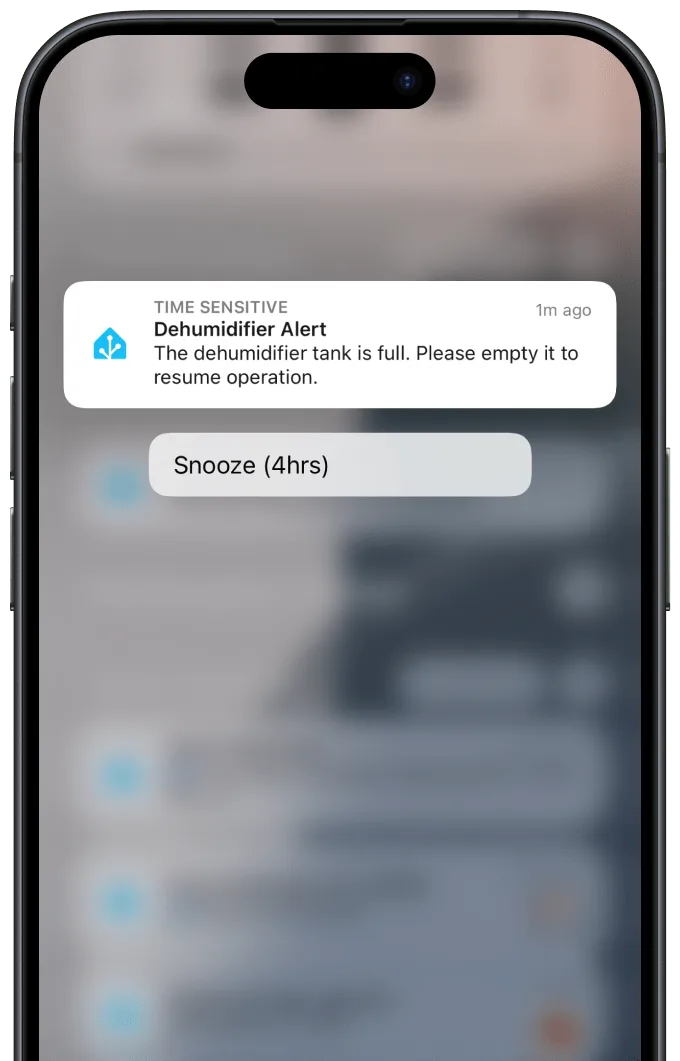
Solution. I added tap-to-act buttons for the alarm system, the garage door, and snoozing. One tap from the notification, no app launch.
Final design
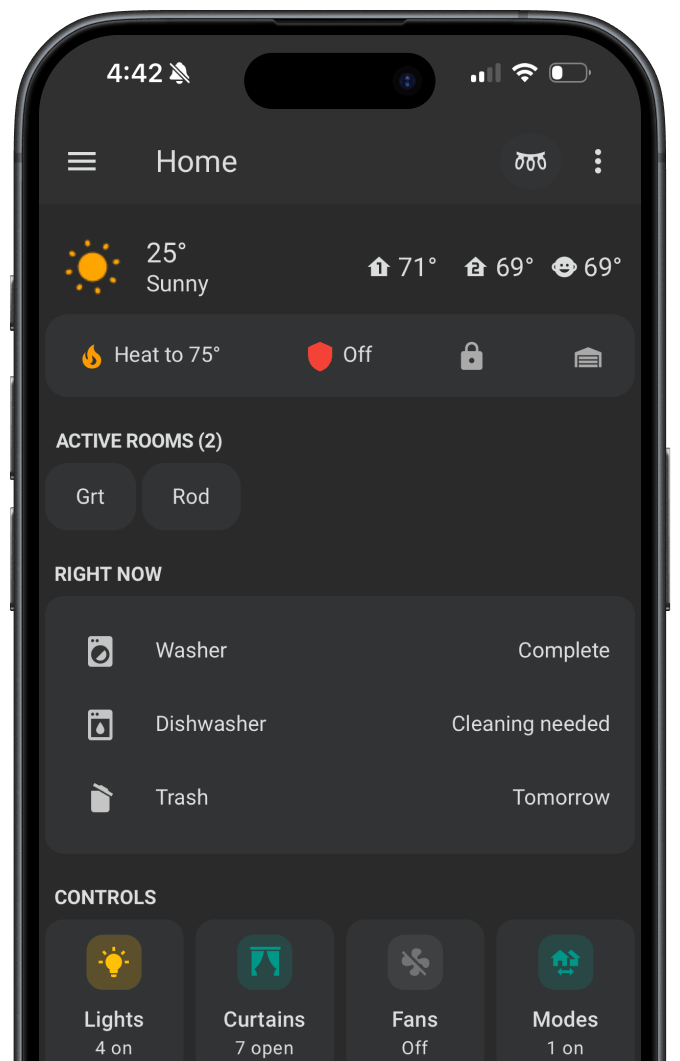
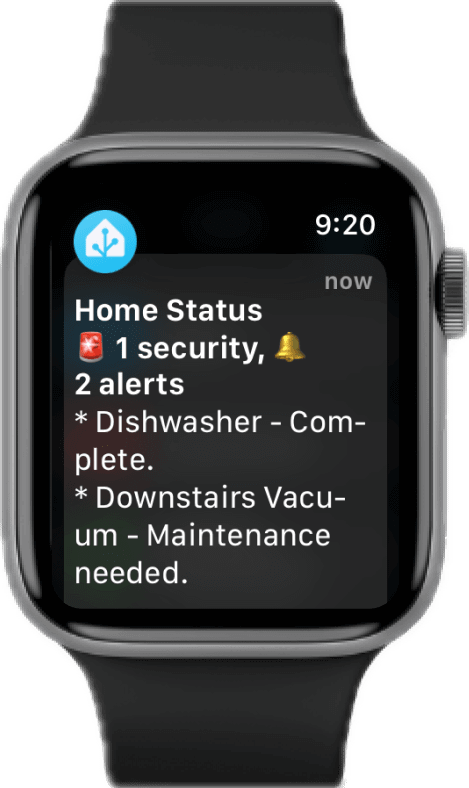
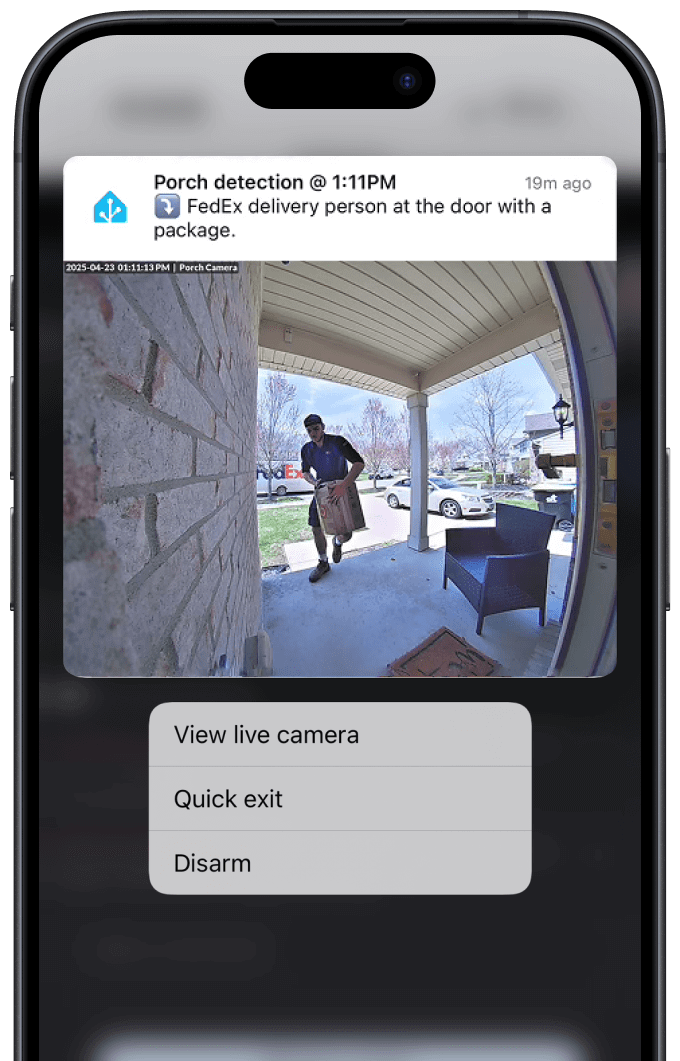
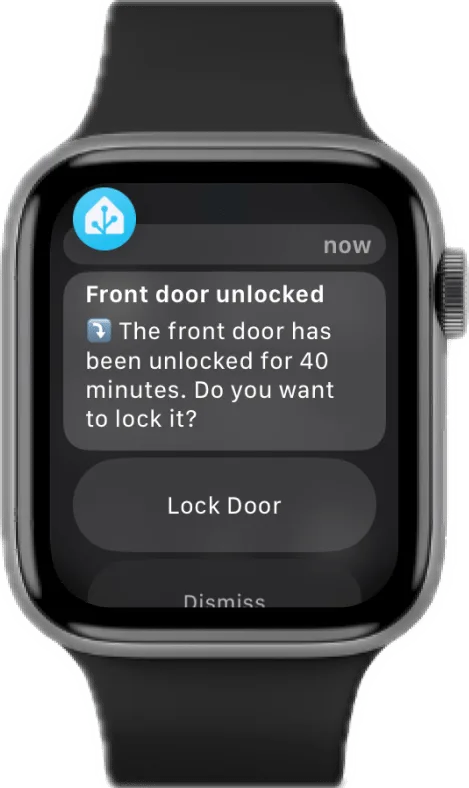
Answering the three How Might We questions
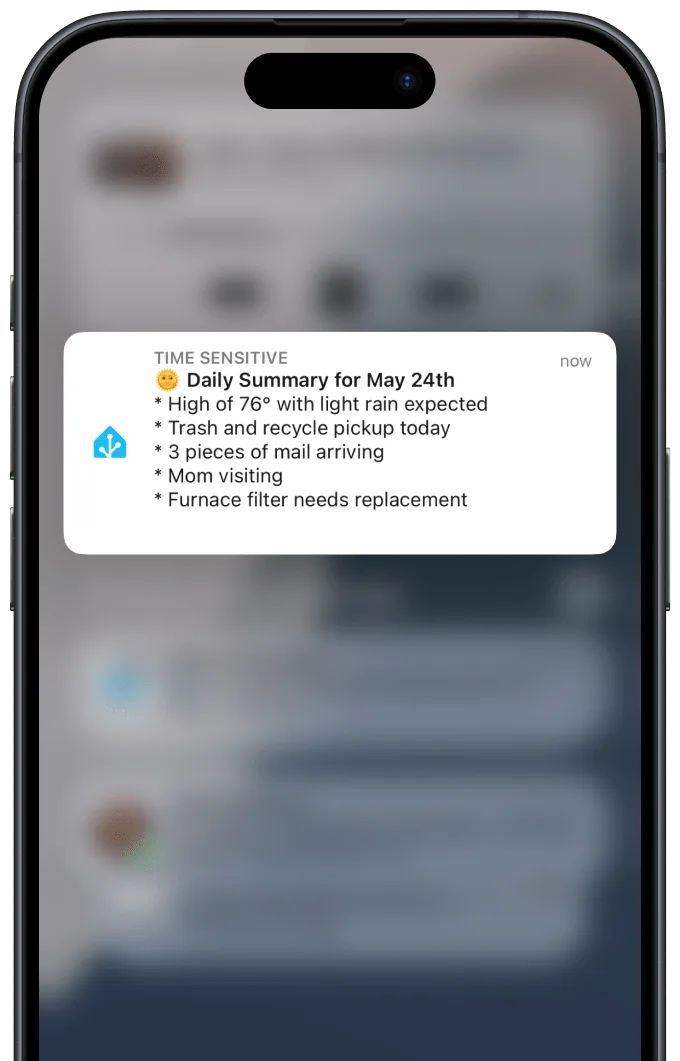
Each feature targets one question, on one channel, with one job.
01How might we
See what's happening right now?
02How might we
Ensure the house is safe and secure?
03How might we
Combat notification overload?
Outcome
From noisy to necessary
Three months in, the system does less and matters more. My wife went from dismissing alerts to relying on them.
Next case study
Yext·Enterprise SaaS·Agentic AI
Helping brands adapt their websites for AI search. (password protected)
Read case studyPassword protected